Google Alerts, still the default starting point for most people, only crawls indexed web pages and news, and it typically takes 12 to 48 hours for Google to index new content before an alert even goes out. It has no visibility into social media, Reddit threads, review sites, or AI answer engines, which together now cover the majority of where a brand actually gets talked about. Estimates put its real coverage at somewhere around 20% of brand-relevant mentions. This guide walks through the full range: free manual methods worth setting up today, their real limitations, and what changes once you move to automated, cross-channel monitoring.
- Google Alerts covers roughly 20% of brand-relevant mentions, since it only tracks indexed web pages and news, missing social media, forums, reviews, and AI answer engines entirely.
- Free tools run on a real delay, typically 24 to 72 hours between a mention appearing and an alert reaching you, which is long enough for a small issue to spread before anyone on the team even sees it.
- Stacking two or three free tools closes some of the gap, but each one covers a different slice, and none of them talk to each other or hand you a combined view.
- No free tool offers sentiment analysis, an API, or team-level workflow, so scaling past a solo founder checking alerts by hand eventually forces a decision about automation.
- The right starting point depends on mention volume, not company size. A small brand with a loud, active community can outgrow free tools faster than a larger, quieter one.
Free methods worth setting up today
None of these cost anything, and all of them take under ten minutes to set up. None of them alone gives a complete picture, which is the theme running through this whole guide.
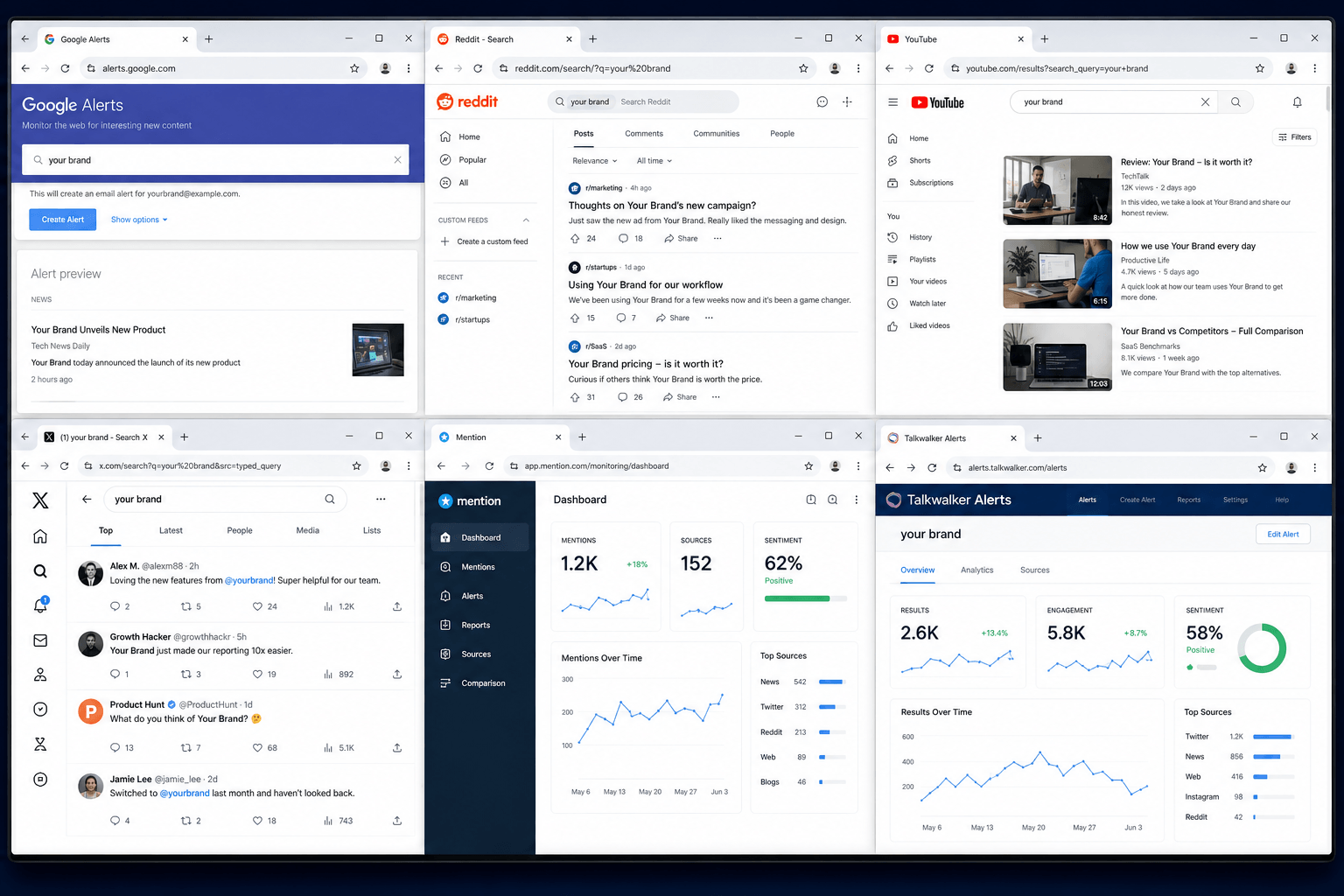
- Google Alerts. Set an alert for your exact brand name, a common misspelling, and your product name separately. Choose "as-it-happens" delivery, though that still means whenever Google's crawler indexes the page, not the moment it publishes.
- Social Searcher. A free social search engine that pulls public posts, hashtags, and profile mentions across major networks without requiring a login. Good for a quick manual check, not built for ongoing monitoring.
- Platform-native search. Reddit's own search, X's advanced search operators, and LinkedIn's post search each catch mentions the aggregator tools sometimes miss, especially inside niche subreddits or industry-specific LinkedIn groups.
- RSS feeds on niche forums and review sites. Many industry forums and some review platforms still support RSS. Piping those into a free reader gives a lightweight, near-real-time feed for the specific communities where your category gets discussed most.
- Site search operators on Google itself. Running a manual "yourbrand -site:yourdomain.com" search weekly catches some of what Alerts misses or delays, since a live search can surface pages before they trigger an alert email.
Where free methods actually fall short
The delay is the first real cost. Google's crawlers typically take 12 to 48 hours to index new content, and Google Alerts adds its own processing time on top of that, so a "real-time" alert frequently lands 48 hours or more after the mention actually went live. For a routine mention, that lag barely matters. For an emerging complaint or a piece of coverage starting to spread, two days is long enough for the story to already be well past the point where an early response would have helped.
Coverage is the second gap, and it is bigger than most people expect going in. Google Alerts sees indexed web pages and news articles only. It has no access to Reddit threads unless a specific thread happens to rank in Google's index, no visibility into private or semi-private communities like Discord servers or Slack groups, and nothing at all from AI answer engines like ChatGPT or Perplexity, which now shape a meaningful share of how people research a brand before ever typing a search query. Stack up everything Alerts cannot see and the estimated real coverage lands around 20% of total brand-relevant mentions, sometimes less depending on how active a brand's community actually is on social and forum platforms.
The third gap is structural, not just about coverage. None of the free tools offer sentiment analysis, so every mention arrives with equal weight whether it is glowing praise or a serious complaint, and someone still has to read each one to know which is which. None offer an API or webhook delivery, so nothing can feed into a dashboard or trigger an automated workflow. And none support a shared team view, so if more than one person needs visibility, everyone ends up subscribing to the same alerts separately and cross-checking manually.
Stacking free tools into a workable stopgap
For a very early-stage brand or a solo founder, running Google Alerts alongside Social Searcher and a weekly manual platform search closes a meaningful chunk of the coverage gap, even if it never fully closes it. The practical setup: alerts for exact brand name, common misspellings, and product names running continuously, a Social Searcher check two or three times a week, and a calendar reminder for the manual platform searches so they do not quietly stop happening after the first busy month.
This stopgap approach has a natural ceiling. It works because the mention volume is still low enough for one person to reasonably track it by hand. The moment volume grows, whether from a product launch, a press hit, or simple organic growth, the time cost of manually checking four or five separate tools starts to outpace what any one person can sustain alongside their actual job.
What automated monitoring actually adds
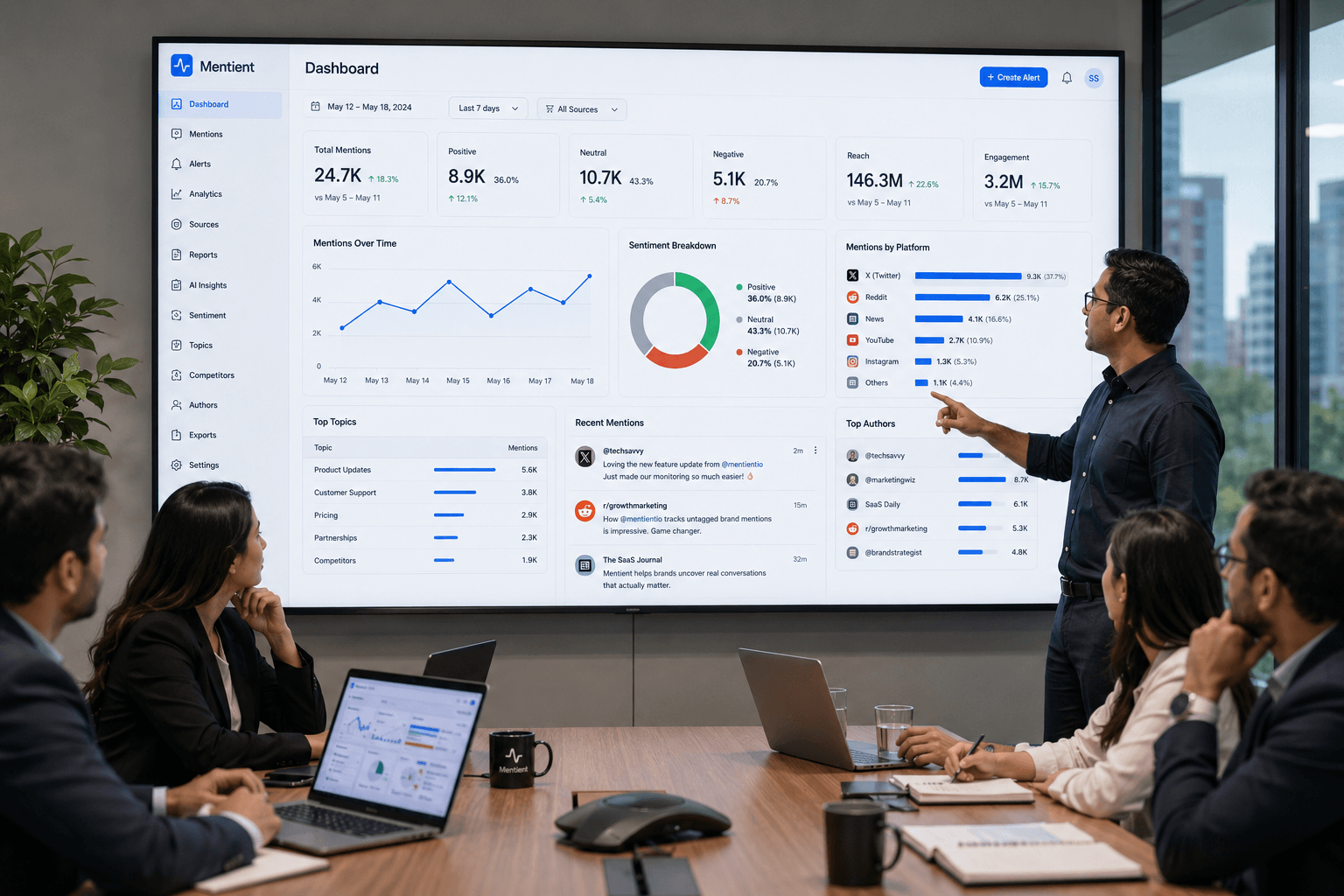
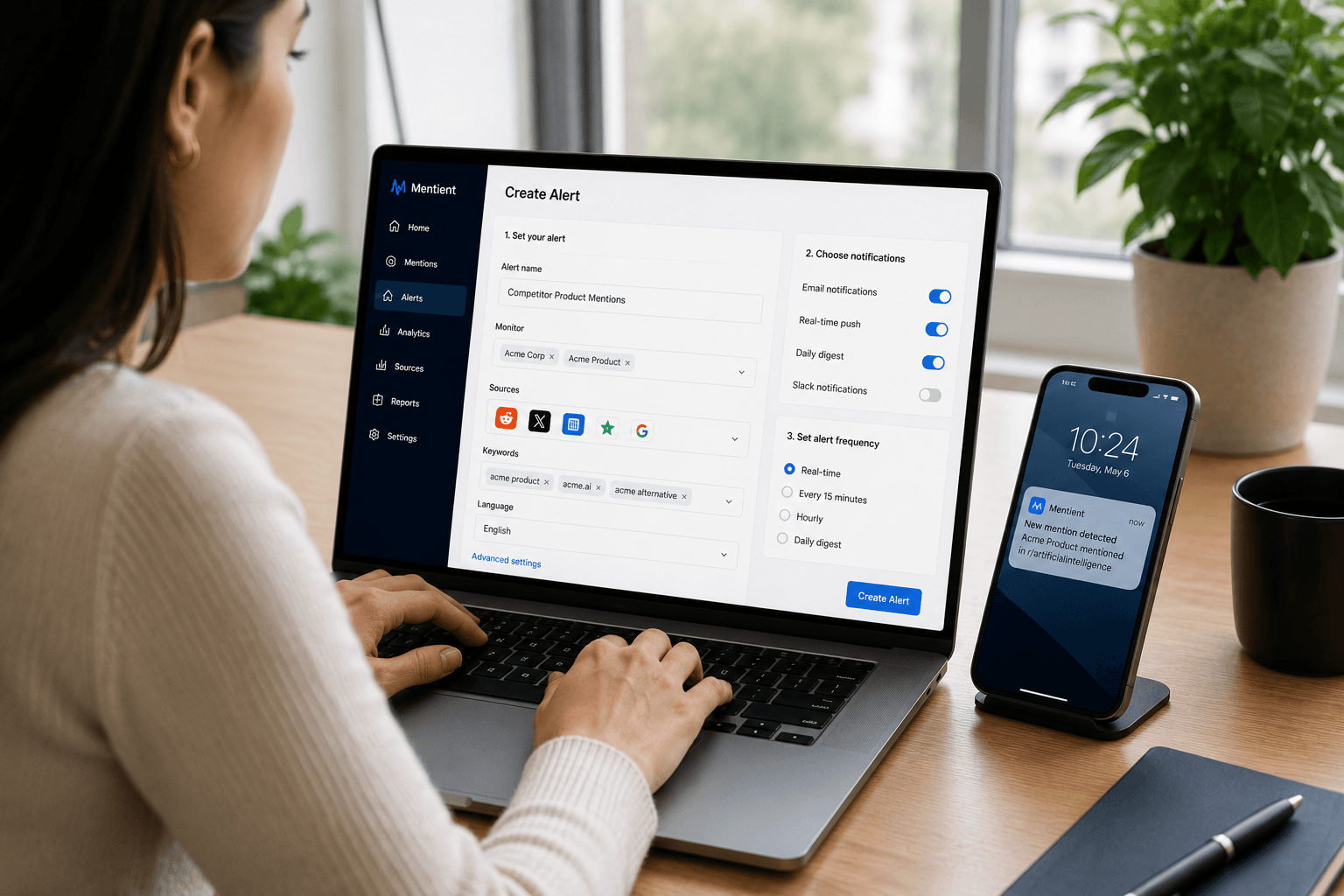
An automated platform closes the three gaps free tools cannot close on their own. Coverage extends across news coverage, social platforms, Reddit and forums, and customer reviews in one place, rather than five disconnected browser tabs. Speed improves from a 24-to-72-hour lag down to something closer to real time, since automated crawlers do not wait on the same indexing cycle a general-purpose search engine runs on. Sentiment gets scored automatically, so a spike in mention volume can be flagged as good or bad news before a human ever opens the dashboard.
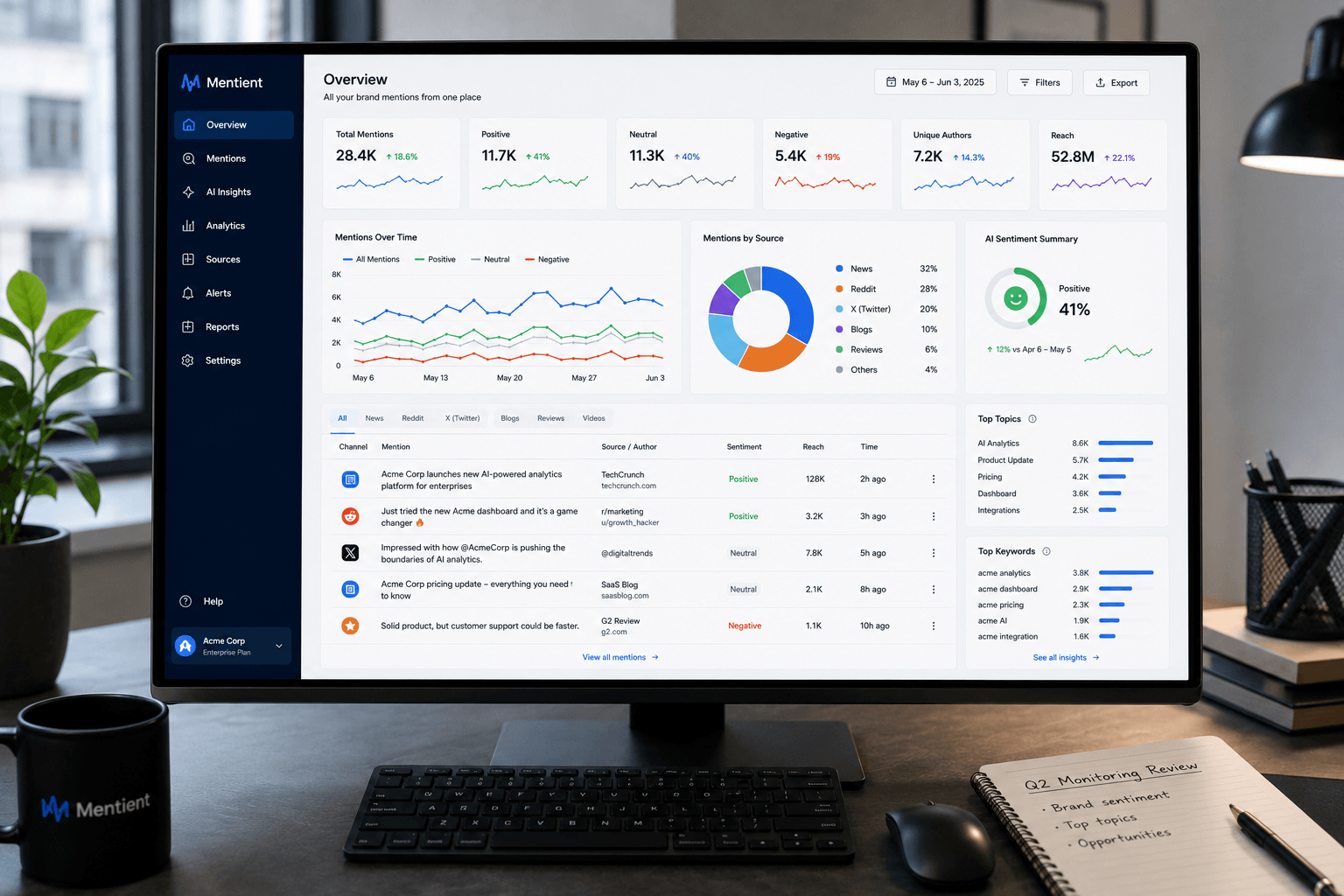
Context-aware AI monitoring is the piece no free tool touches at all right now. As more category research shifts into ChatGPT, Gemini, and Perplexity conversations that never generate a traditional web page, a monitoring setup built entirely around crawling indexed pages structurally cannot see any of it, no matter how many free tools get stacked on top of each other.
When to move off free tools
Three signals reliably show up before a team finally makes the switch. The first is a missed mention someone else caught first, a customer forwards a screenshot of a Reddit thread or a review that has been live for days and nobody on the team saw it coming through any alert. The second is checking fatigue, when the person responsible for monitoring quietly stops opening all five tabs every day because it has become an unmanageable chore layered on top of their real job. The third is a specific event, a launch, a funding announcement, a piece of press, that spikes mention volume past what manual review can keep up with in real time.
Agencies managing monitoring across several client brands tend to hit this point earliest, since stacking free tools per client multiplies the manual burden by every account on the roster. PR teams handling a brand's public narrative benefit from moving early too, since catching coverage faster is often the difference between shaping a story and only reacting to it after it has already settled.
A practical setup checklist
- List every name variant worth tracking. Exact brand name, common misspellings, product names, and founder names if the brand is closely tied to a public individual.
- Set up Google Alerts for each variant today. It costs nothing and takes a few minutes, even if it becomes a secondary safety net once a fuller setup is in place.
- Add a weekly manual check on Reddit, X, and LinkedIn search. Ten minutes, calendared, catches what the automated free tools miss on those specific platforms.
- Track mention volume for one month before deciding on tooling. A rough count of how many mentions actually show up, across every method combined, tells you whether manual review is still realistic or already breaking down.
- Revisit the setup after any major event. A launch, funding round, or press hit changes mention volume overnight, and the monitoring approach that worked last quarter may not hold up this one.
Frequently asked questions
Is Google Alerts still worth setting up if I plan to use a paid tool eventually?
Yes. It costs nothing and takes a few minutes, and it functions as a reasonable secondary safety net even after a fuller monitoring setup is in place, since redundancy across two independent systems catches the rare edge case either one misses alone.
How many free tools should I realistically stack before it stops being worth the effort?
Two or three tends to be the practical ceiling before the time cost of checking each one separately starts to outweigh what any single additional tool adds. Beyond that point, the hours spent manually cross-referencing five or six disconnected sources usually cost more than a modest monthly tool subscription would, especially once you factor in the value of the mentions that still slip through despite all that manual effort. Most teams that try to push past three tools end up quietly abandoning at least one of them within a few weeks anyway.
Can free tools catch a PR crisis before it spreads?
Rarely in time to matter. The 24-to-72-hour delay on tools like Google Alerts means a fast-moving story on social media or Reddit can gain real momentum before an alert email even arrives, and Alerts has no social coverage at all to catch the earliest signs regardless of delay.
Do small businesses actually need automated monitoring, or is that overkill?
Depends on mention volume more than company size. A small brand with an active, vocal community on Reddit or a niche forum can generate more monitoring workload than a larger, quieter brand, so the right test is tracking actual mention count for a month rather than assuming size alone determines readiness.
Free tools are a legitimate starting point, not a compromise to be embarrassed about. The honest test is whether the current setup is actually catching what matters, and the only real way to know is to track total mention volume for a few weeks and see how much of it free tools alone are missing. Set up the checklist above this week, whichever stage you are at, and revisit it after the next event that moves the needle on how much people are actually saying about the brand.
See every mention in one place, closer to real time
Mentient tracks news, social, reviews, forums, and AI answer engines together, with sentiment scored automatically instead of read one mention at a time. Start free and see what free tools have been missing.
Start free trial