Most guides to social listening assume you already have a program and just need to sharpen it: better queries, better tools, better metrics. That is not the problem most teams starting from zero actually have. If nobody owns the work, no budget has been approved, and no one has decided what happens after the first alert fires, none of that tuning matters yet. This guide covers the part that comes before the strategy: how to get a listening program funded, staffed, and running inside thirty days, with the ownership model, the budget tiers, and the week-by-week build we use when a client has nothing in place at all.
- A program needs a named owner before it needs a tool. Ownership usually sits in marketing, but the fastest-failing setups are the ones where nobody signed up to review the data every week.
- Budget ranges from near zero to five figures a year, and the right tier depends on team size and mention volume, not ambition. A ten-person startup and a public company should not be pricing the same plan.
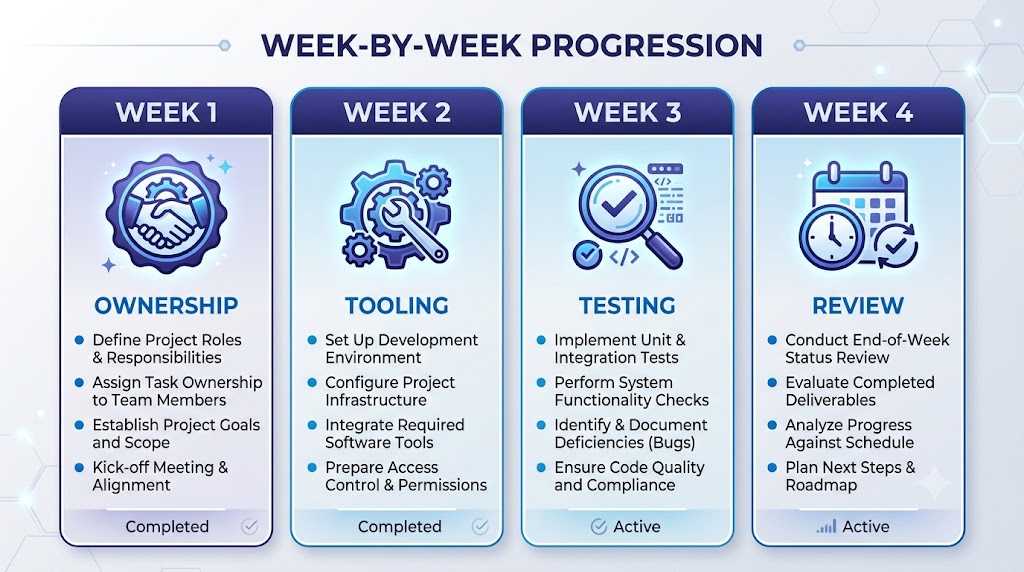
- The realistic build timeline is thirty days, split roughly into a first week deciding ownership and scope, a second week standing up queries and tooling, a third week testing against real data, and a fourth week running the first full review cycle.
- Getting budget approved is a separate skill from running the program. A one-page business case with a cost tier and a named risk it prevents gets approved far more often than a feature comparison deck.
- Most new programs die in month three, not month one. The launch is easy to get excited about. The habit of a recurring review, with a person accountable for showing up to it, is the thing that keeps a program alive past the first budget cycle.
What starting from scratch actually means
Starting from scratch is a specific situation, and it is worth naming precisely because the fix is different from tuning an existing setup. It means there is no tool in place, no one has been assigned to watch for mentions, and there is no agreed answer to what happens if something negative starts trending. Maybe someone on the team occasionally Googles the brand name or scrolls a competitor's Twitter replies. That is not a program. It is a habit that lives in one person's head and disappears the day they change roles.
If you already have queries built, a tool selected, and metrics you review, you are past this stage, and our guide on building a social listening strategy covers the query taxonomy and tool evaluation in more depth than we will here. Our companion piece on the social listening process walks through the day-to-day process once things are live. This guide sits before both of those. It answers the questions that come up before you have written a single Boolean query: who owns this, what does it cost, how do you get it approved, and what does the first month of actually running it look like.
Decide who owns the program
Ownership is the single most skipped decision in a new program, and it is the one that determines whether the thing survives its first quarter. In most companies, the listening owner sits in marketing, since that is where brand reputation and campaign performance already get tracked. But ownership only works if it comes with three things attached: a defined weekly time commitment, authority to route findings to other teams, and a name that shows up in the calendar invite for the review meeting.
A useful way to structure this at the start is a simple ownership split rather than a full committee, since committees are where new programs go to stall:
| Role | Typical owner | What they do |
|---|---|---|
| Program owner | Marketing or comms lead | Reviews the data weekly, runs the monthly reporting cadence |
| Crisis responder | PR lead or founder at small companies | First contact when an alert crosses the critical threshold |
| Product liaison | Product manager or support lead | Receives recurring product and support complaints |
| Executive sponsor | VP marketing, CMO, or CEO at small companies | Approves budget, unblocks the program when it needs cross-team buy-in |
At a ten-person startup, one person often fills three of these four boxes, and that is fine. What matters is that the boxes are filled by a name, not left blank. A program with no crisis responder named in advance means the first real crisis becomes a scramble to figure out who is supposed to act, at the exact moment speed matters most. A dedicated reputation management workflow makes this handoff smoother, since alerts route straight to the named responder instead of sitting in a shared inbox.
Pick a budget tier that matches your size
Tool pricing for social listening spans a genuinely wide range, and most of the confusion in a first-time budget conversation comes from comparing tiers that were never meant for the same company. entry-tier pricing data shows tools running from roughly $19 to $149 a month, mid-market platforms land between $199 and $499 a month, and enterprise suites clear $800 a month and can run into five or six figures a year on annual contracts. The honest starting question is not "what is the best tool." It is "which tier matches our mention volume and headcount."
| Company size | Realistic monthly budget | What you need at this tier |
|---|---|---|
| Solo founder or under 10 people | $0 to $50 | Free alerts plus one low-cost tool covering your two or three highest-value sources |
| Growing SaaS or startup team | $50 to $300 | A dedicated brand monitoring tool with Reddit and review site coverage, one to three seats |
| Mid-market company | $300 to $1,000 | Broader source coverage, historical backfill, multiple team seats and routing |
| Enterprise or regulated industry | $800 and up | Dedicated support, compliance features, custom integrations into an internal warehouse |
A pattern we see constantly with first-time buyers: a small team gets talked into an enterprise demo, falls for the polish, and signs a contract sized for a company ten times their headcount. The fix is simple and unglamorous. Write your team size and rough monthly mention volume on a sticky note before you take a single demo call, and use it to filter out tiers that do not apply to you before the sales conversation even starts.
Build the one-page business case
Getting a new line item approved is a different skill from running the program once it exists, and it is the step most first-time program owners underprepare for. A twenty-slide deck comparing seven vendors gets tabled. A one-page case with a cost tier, a named risk, and a clear owner gets a yes in one meeting.
The case should answer four questions in this order, and no more than a paragraph each: what risk or opportunity does this catch that we are currently missing, what does it cost at the tier we actually need, who owns it and what is their weekly time commitment, and what does success look like in ninety days. Skip the feature comparison table entirely at the approval stage. Save it for the vendor evaluation after budget is already agreed in principle.
For the risk section specifically, a concrete example lands harder than an abstract argument. "A competitor's product recall drove a wave of switching conversation on Reddit last quarter, and we found out from a sales call instead of from our own data" is a sentence an executive remembers. "We should have better visibility into brand sentiment" is a sentence that gets nodded at and forgotten by the next meeting. Teams at early-stage SaaS companies tend to have the easiest time getting this approved, since a single missed switching signal is usually easy to connect to a specific lost deal.
The 30-day rollout, week by week
Once budget and ownership are settled, the build itself moves fast. Here is the week-by-week plan we run with a client starting from zero.
Week 1: lock ownership and scope. Fill the ownership table from earlier with actual names. Write the one-page business case if you have not already, and get sign-off on the budget tier. Decide on one primary goal, brand health, competitive tracking, or crisis readiness, since trying to serve all three at once in week one is how programs stall before they launch.
Week 2: stand up the tool and the first queries. Get the account provisioned, connect the sources that match your goal, and write your first-pass Boolean queries for your brand name, its common misspellings, and two or three named competitors. Do not aim for a perfect query in week two. Aim for a working one you can tune once real data starts flowing. If you want to sanity-check your setup before committing to a paid tier, our free AI visibility audit is a useful gut-check on whether your brand is even discoverable in the places you are about to start tracking.
Week 3: test against real data and set alert thresholds. Pull a week of live mentions and read a sample by hand, the same discipline that makes query tuning work in any listening setup. Set a simple three-tier alert structure, routine, elevated, and critical, and confirm the crisis responder from your ownership table actually receives the critical alerts, alongside the program owner.
Week 4: run the first full review cycle. Hold the first weekly review meeting on the calendar, with the program owner presenting what came in and what, if anything, got routed to another team. This is the week that proves whether the program is a real habit or a one-time setup exercise. If the meeting gets skipped in week four, it usually keeps getting skipped.
The tool takes an afternoon to set up. The habit of someone reviewing it every week is the part that takes thirty days to build, and it is the part that actually determines whether the program is still running in six months.
What changes in month two and beyond
Month one is about proving the mechanics work. Month two is where the program either becomes genuinely useful or quietly turns into a dashboard nobody opens. Three shifts typically happen once the first month is behind you. Queries get tighter as you learn which exclusions actually matter for your brand. The review cadence usually splits into a fast weekly alert check and a slower monthly pattern-review session, since those two jobs run on different clocks and collapsing them into one meeting tends to shortchange both. And the routing rules from week three start getting tested for real, as actual findings get handed to product, support, or sales rather than staying inside the marketing team.
This is also the point to widen beyond social platforms if your goal calls for it. A growing share of brand conversation happens on Reddit threads and forums and inside AI-generated answers rather than public social posts, and a program that only watches Twitter and Instagram in month two is already behind where the conversation actually lives. Expanding coverage should be a deliberate decision in month two, not an afterthought that happens whenever someone notices the gap.
Why most new programs die in month three
The launch is the easy part. Nearly every failed program we have seen follows the same arc: an enthusiastic setup in month one, a review that starts skipping in month two, and by month three the tool subscription is still being paid for but nobody is reading the data. Three specific causes show up over and over.
The first is an ownership gap that only becomes visible once the person who set the program up gets pulled onto something else. If the ownership table from week one was filled with one overloaded person instead of a real split, the program has no backup when that person's attention moves elsewhere. The second is a review meeting with no fixed slot on the calendar, which is the single easiest fix on this entire list and the most commonly skipped one. The third is a program built to serve every possible goal at once, brand health, competitive tracking, and crisis readiness together, which spreads attention thin enough that no single goal gets served well.
The programs that survive past month three almost always have one thing in common: a recurring calendar invite that a specific person is accountable for showing up to, with a habit of naming at least one concrete action that came out of the review. If your program cannot point to a decision it changed by the end of month three, that is the signal to fix the ownership and cadence before adding more queries or more sources.
Frequently asked questions
How much does it cost to start a social listening program?
A solo founder or small team can start for free to around $50 a month using an entry-tier tool covering their highest-value sources. A growing startup should budget $50 to $300 a month, and mid-market companies typically land between $300 and $1,000. Enterprise programs with compliance needs and custom integrations run $800 a month and up. Pick the tier that matches your team size and mention volume rather than the tier with the most features on the vendor's pricing page.
Who should own a social listening program at a small company?
Ownership usually sits with whoever already manages marketing or communications, since brand reputation is already part of their job. At a very small company, the founder often fills this role directly. What matters more than the title is that one named person commits to a weekly review and has the authority to route findings to whoever needs to act on them.
How long does it take to launch a social listening program from nothing?
A realistic timeline is thirty days: one week to lock ownership and budget, one week to stand up the tool and first queries, one week to test against real data and set alert thresholds, and one week to run the first full review cycle. The technical setup itself often takes a single afternoon, since connecting a tool to your first few sources and writing an initial Boolean query is not the hard part. The full thirty days accounts for the slower parts: getting budget approved by whoever holds the purse strings, reading real sample mentions by hand to tune out noise before you trust the data, and most importantly building the habit of an actual recurring review meeting that survives past its first calendar reminder. Teams that try to compress this into a single week usually skip the testing and habit-building steps, and pay for it in month two when the queries turn out to be noisy and nobody remembers to look at the dashboard.
Do we need a dedicated tool, or can we start with free alerts?
Free alerts and manual searches are a reasonable way to prototype your queries and goal for a week or two before spending anything. They break down once mention volume grows past what one person can scan by hand across multiple platforms, which for most brands happens faster than expected. Start manual if you want to test your thinking cheaply, then move to a dedicated tool before scaling the program past its first month.
What is the most common reason new social listening programs fail?
An ownership gap that only becomes visible once the person who set it up gets pulled onto another project, combined with a review meeting that never got a fixed slot on the calendar. Both are avoidable with the ownership table and week-four review habit covered above. The tool rarely fails a new program. The missing calendar invite does.
A social listening program is not the tool you pick. It is the owner who reviews it, the budget tier that matches your size, and the calendar invite that survives past month three. Get those three things right in the first thirty days, and the query tuning and metric selection from our other guides will have something real to plug into.
Launch your program without the enterprise price tag
Mentient gives growing teams Reddit, news, and AI-visibility monitoring in one place, priced for teams that are not ready for a five-figure contract. Set up your first queries today and see what your first week of real data looks like.
Start free trial