AI visibility tools, sometimes called GEO trackers, all do the same basic job: run a fixed set of category questions against ChatGPT, Gemini, Perplexity, and similar engines, and report which brands get cited, in what context. Past that shared starting point, the category splits hard by price and depth. Otterly starts a solo operator at $29 a month. Profound has raised $155 million at a reported $1 billion valuation serving Fortune 500 brands, with plans running from roughly $82 to $332 a month before enterprise pricing kicks in. This guide compares the tools worth knowing in 2026, starting with where Mentient fits, then covering five more platforms with real, sourced pricing.
- Pricing in this category spans $29 a month to enterprise-only quotes, with most tools charging by tracked prompt count rather than a flat seat price.
- Google AI Mode and Gemini tracking are add-ons on several platforms, not included in the base plan, which can meaningfully change the real monthly cost.
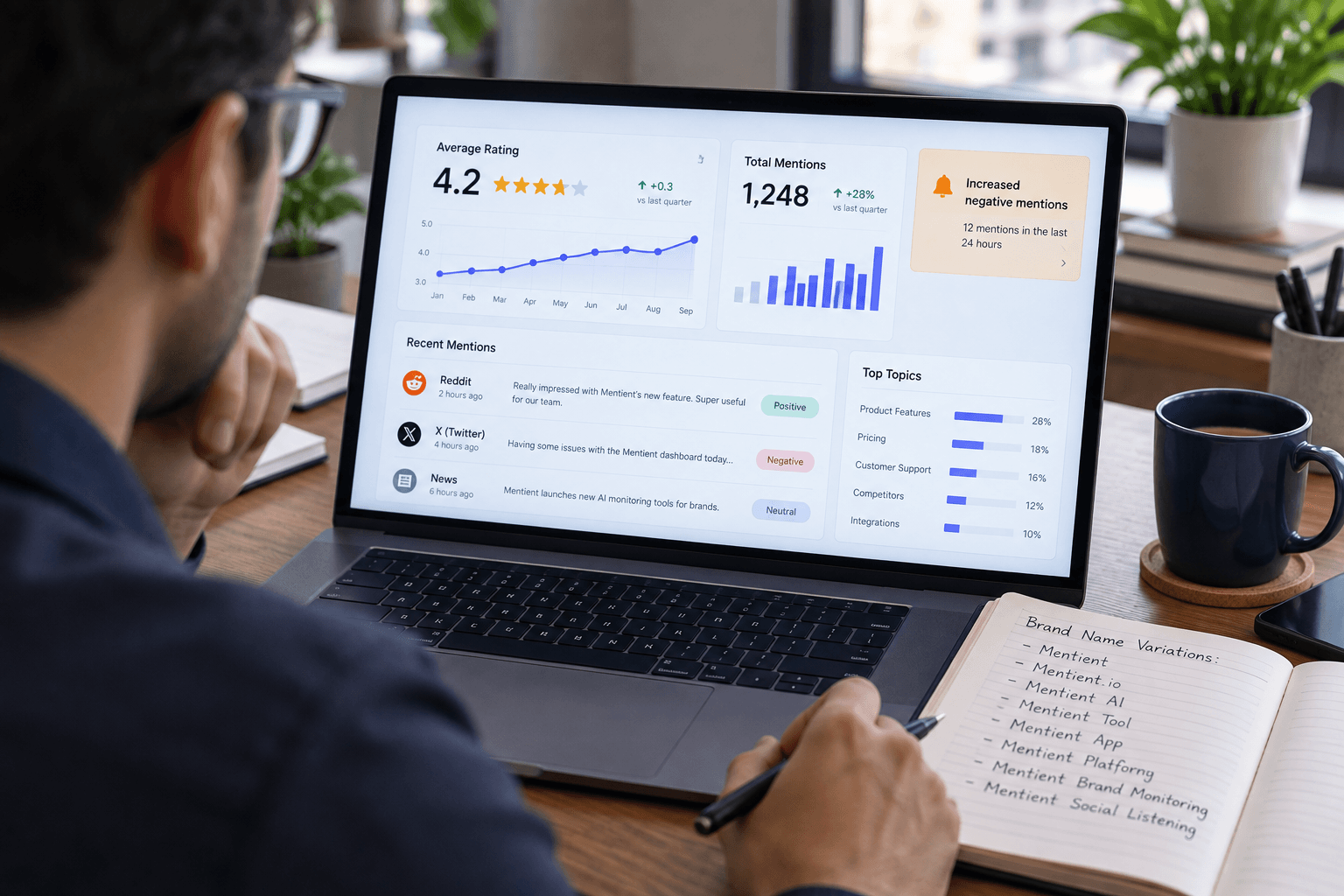
- Mentient tracks AI answer engines alongside news, social, reviews, and forums in one dashboard, built for teams that want citation tracking without adopting a separate standalone tool.
- Most standalone AI visibility tools only track citations, with no connection to the broader mention data, news coverage, or reviews that often shape what an AI engine ends up saying about a brand.
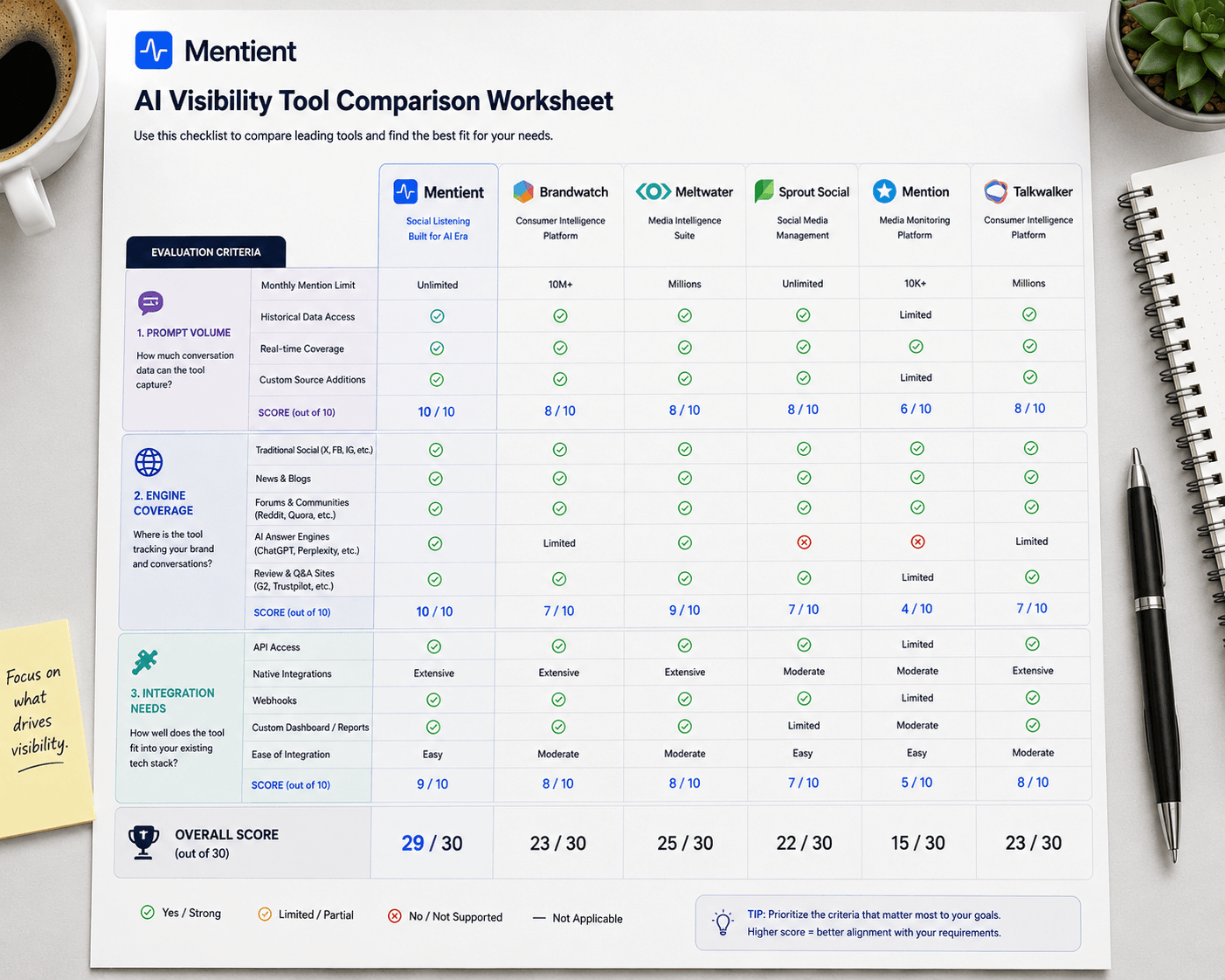
- Prompt count is the hidden budget lever in this category. Entry tiers commonly cap out at 15 to 25 tracked prompts, which is thin for a brand competing across more than one product category.
Quick comparison table
| Tool | Starting price | Best for |
|---|---|---|
| Mentient | $65/mo | AI visibility alongside news, social, reviews, and forums in one dashboard |
| Profound | ~$82.50/mo annual, 50 prompts | Enterprise brands needing deep model coverage and compliance |
| Peec AI | €89/mo, 25 prompts | Mid-market teams wanting Profound-style depth at a lower cost |
| Semrush AI Visibility Toolkit | $99/mo, 25 prompts | Teams already inside the Semrush ecosystem for SEO |
| Otterly.AI | $29/mo, 15 prompts | Solo operators and small teams on a tight budget |
| Evertune | Custom, enterprise-focused | Large, well-funded brands wanting a dedicated enterprise partner |
Pricing reflects publicly reported figures as of August 2026 and can change; confirm current rates directly with each vendor before budgeting.
1. Mentient
We built Mentient's AI visibility platform because standalone GEO trackers answer half the question. Knowing that ChatGPT cited a competitor instead of your brand is useful. Knowing that the citation traces back to a Reddit thread, a wave of recent reviews, or a press story tells a team what to actually go fix. Mentient tracks citation frequency, context, and competitive position across engines the same way the dedicated tools do, but ties it to news coverage, social platforms, customer reviews, and forum conversation in the same dashboard.
Pricing starts at $65 a month with no sales call required. Context-aware AI monitoring scores sentiment on every citation, not just frequency, so a mention count never gets reported as a win without knowing whether the mention actually favored the brand.
Strengths: unified view across AI citations and traditional monitoring channels, transparent pricing, no separate tool to adopt on top of existing monitoring. Consider instead if: your only requirement is AI citation tracking in isolation with the deepest possible model coverage for a Fortune 500-scale compliance need, which is closer to Profound's specific strength.
2. Profound
Profound is the enterprise reference point in this category, having raised $155 million at a reported $1 billion valuation and built its customer base around Fortune 500 brands. The Starter plan runs about $82.50 a month billed annually for 50 tracked prompts, with Growth at roughly $332.50 a month for 100 prompts, and enterprise pricing beyond that requiring a direct conversation. Profound offers demos rather than a self-serve free trial.
Strengths: deep model coverage, compliance features suited to large regulated brands, established enterprise track record. Consider instead if: your budget or team size does not match enterprise-tier pricing, since Peec AI covers similar ground at a noticeably lower cost.
3. Peec AI
Peec AI positions itself as the Profound-style analytics most brands actually use, at roughly a fifth of the price. The Starter plan runs €89 a month for 25 tracked prompts, with Pro at €199 a month for 100 prompts and added Slack support, and a free trial is available before committing.
Strengths: strong depth-to-price ratio, free trial to test before buying. Consider instead if: you specifically need Profound's enterprise compliance features or the widest possible model coverage for a very large brand.
4. Semrush AI Visibility Toolkit
Semrush folded AI visibility tracking into its existing SEO platform, standalone at $99 a month per domain for 25 custom prompts billed annually, or bundled into Semrush One starting at $199 a month alongside its full SEO toolkit. Teams already paying for Semrush's classic SEO tools save roughly $40 a month bundling versus buying both separately. No free trial is offered on the standalone AI Visibility Toolkit.
Strengths: natural fit for teams already inside the Semrush ecosystem, one bundled bill instead of two separate subscriptions. Consider instead if: you have no existing Semrush relationship, since a standalone AI visibility tool built for that specific job may offer more depth per dollar.
5. Otterly.AI
Otterly is the lowest entry price in this category, with a Lite plan at $29 a month covering 15 tracked prompts, scaling to Standard at $189 and Premium at $489 for higher prompt volume and added features like unlimited workspaces and API access. Google AI Mode and Gemini tracking sit outside the core four engines as paid add-ons, running roughly $9 to $149 a month depending on plan tier, which is worth factoring into the real monthly cost before comparing it against a flat-rate competitor.
Strengths: lowest entry cost in the category, useful for a solo operator or very small team testing the waters. Consider instead if: full engine coverage including Gemini and Google AI Mode matters from day one, since those arrive as separate paid add-ons rather than included in the base price.
6. Evertune
Evertune sits at the well-funded, enterprise-focused end of the category, built around large brands that want a dedicated partner rather than a self-serve dashboard. Detailed public pricing is not published, and evaluation generally starts with a direct sales conversation rather than a signup flow.
Strengths: enterprise-grade partnership model, strong fit for large, well-resourced marketing teams. Consider instead if: you want to test a tool with a self-serve trial before any sales conversation, since Evertune's model does not offer that entry path.
How to choose
Start with prompt volume, not the headline price. A brand competing across three or four distinct product categories will burn through a 15-to-25-prompt entry tier fast, and the real monthly cost only becomes clear once you map your actual query list against each plan's cap. Next, check whether Google AI Mode and Gemini are included or priced as add-ons, since that gap changes the effective price meaningfully on a few of these platforms.
Last, decide whether standalone citation tracking is enough, or whether the citation data needs to connect to the rest of your monitoring stack to actually be useful. Agencies managing this across multiple client brands should weigh reporting built for agency workflows heavily, since juggling a separate AI visibility login per client on top of existing monitoring tools adds real overhead. SaaS teams selling to a technical, AI-forward buyer should read a stage-appropriate breakdown before locking into an enterprise-tier contract sized for a much larger company.
Frequently asked questions
What's the difference between an AI visibility tool and a GEO tool?
Largely marketing language for the same category. AI visibility tools measure whether and how a brand gets cited in AI answers. GEO, short for Generative Engine Optimization, refers to the practice of improving that citation rate. Most tools in this space do both: measurement and recommendations for improving the number.
How many prompts do I actually need to track?
Start with your top 15 to 20 category questions, the ones a real buyer would type, and expand from there once you see which plan tier the volume actually demands. Most entry tiers in this category cap out between 15 and 25 prompts, which covers one core product category reasonably well but gets thin fast for a brand competing across several distinct segments or serving multiple buyer personas who search in noticeably different language, so it is worth mapping your full query list before committing to a plan rather than guessing at the entry tier and upgrading later once the gaps show up in a monthly report.
Is a standalone AI visibility tool better than a bundled one like Mentient?
Depends on whether the AI citation data needs to connect to your other monitoring. A standalone tool gives deeper focus on that one channel alone. A bundled platform trades some of that depth for context, tying citations back to the news, social, and review activity that often explains why they happened.
Do these tools work for local or regional businesses, not just national brands?
Yes, though the value depends heavily on how often a local buyer's search actually routes through an AI engine versus a maps-style local search. A regional service business is often better served starting with a lower-cost entry tier to test the actual query volume before committing to a larger plan.
Every tool on this list can tell you whether an AI engine mentioned your brand. The real differences show up in prompt volume, engine coverage, and whether that citation data stands alone or connects to the rest of what people are actually saying about you. Map your real query list against each plan's limits before choosing, and weigh whether standalone tracking or a connected view fits how your team actually works.
Track AI citations alongside every other channel that matters
Mentient tracks ChatGPT, Gemini, and Perplexity citations in the same dashboard as news, social, reviews, and forums, with pricing published openly. Start free and see your own AI visibility today.
Start free trial