ChatGPT crossed a billion weekly active users in August 2026. Gemini sits near 950 million monthly users, with Gemini-powered AI Overviews reaching roughly 2.5 billion people a month inside Google Search itself. Perplexity processes around 780 million queries a month. That is an enormous volume of category research now happening inside a chat window instead of a search results page, and on Google AI Mode specifically, about 93% of those sessions end without a single click to any website. If your brand is not named inside the answer, a large share of that audience never sees it at all. This guide covers exactly how to check where your brand stands across these three engines, what to track, and how to build a repeatable monitoring process instead of a one-time spot check.
- 93% of Google AI Mode sessions end with zero clicks to any website, which means the AI answer itself is now the entire brand experience for a huge share of category research.
- ChatGPT, Gemini, and Perplexity do not agree with each other. A brand can dominate one engine's answers and be nearly invisible on another, since each pulls from different data sources and weighs freshness and authority differently.
- Mention frequency alone is not the metric that matters. Context, whether a brand shows up as the top recommendation, a budget alternative, or a legacy option to avoid, changes what a mention is actually worth.
- Manual checking works for a first pass but does not scale. A fixed query set run by hand once catches a snapshot. Run it consistently, on a schedule, across all three engines, and that snapshot starts to become an actual trend.
- Most legacy monitoring tools built before 2023 still do not track any of this, which leaves a real blind spot for brands relying on a traditional social or media monitoring platform alone.
Why AI visibility matters now
The scale shift happened fast. ChatGPT alone passed a billion weekly active users in August 2026, up from 900 million just six months earlier in February. Gemini's app reached 950 million monthly users, and Gemini-powered AI Overviews now reach an estimated 2.5 billion people a month inside standard Google Search results, not a separate product most people have to seek out. Perplexity, smaller but growing, processes roughly 780 million queries monthly. Combined, that is category research happening at a volume no single company's website analytics can see directly.
The zero-click number is the part worth sitting with. On Google AI Mode specifically, around 93% of sessions end without a single click through to any website. A person asks a question, gets a synthesized answer that may or may not name your brand, and moves on. There is no impression logged in your analytics, no referral row in a dashboard, nothing. The only way to know what that answer said is to go ask the same question yourself, which is exactly the gap this guide is built to close.
What to actually track
Mention frequency is the baseline metric and the easiest one to start with: out of a fixed set of category questions, how many answers name your brand at all. It is also the least informative metric on its own, since a mention buried in a list of twelve competitors means something very different than a mention as the single recommended option.
- Mention frequency. The share of a fixed query set where your brand appears at all, tracked separately per engine.
- Mention context. Whether your brand shows up as the top recommendation, one option among several, a budget alternative to a bigger competitor, or a legacy choice the answer actively steers a reader away from.
- Competitive position. Which competitors appear alongside your brand in the same answers, and how consistently they outrank you in the ordering an engine chooses to present.
- Source attribution. Which of your own pages, if any, the engine cites when it does mention you, which tells you exactly what content is doing the work.
- Accuracy. Whether the details the engine states about your brand, pricing, features, founding year, are actually correct. AI answers get specifics wrong more often than most brands realize until they check.
The manual tracking method
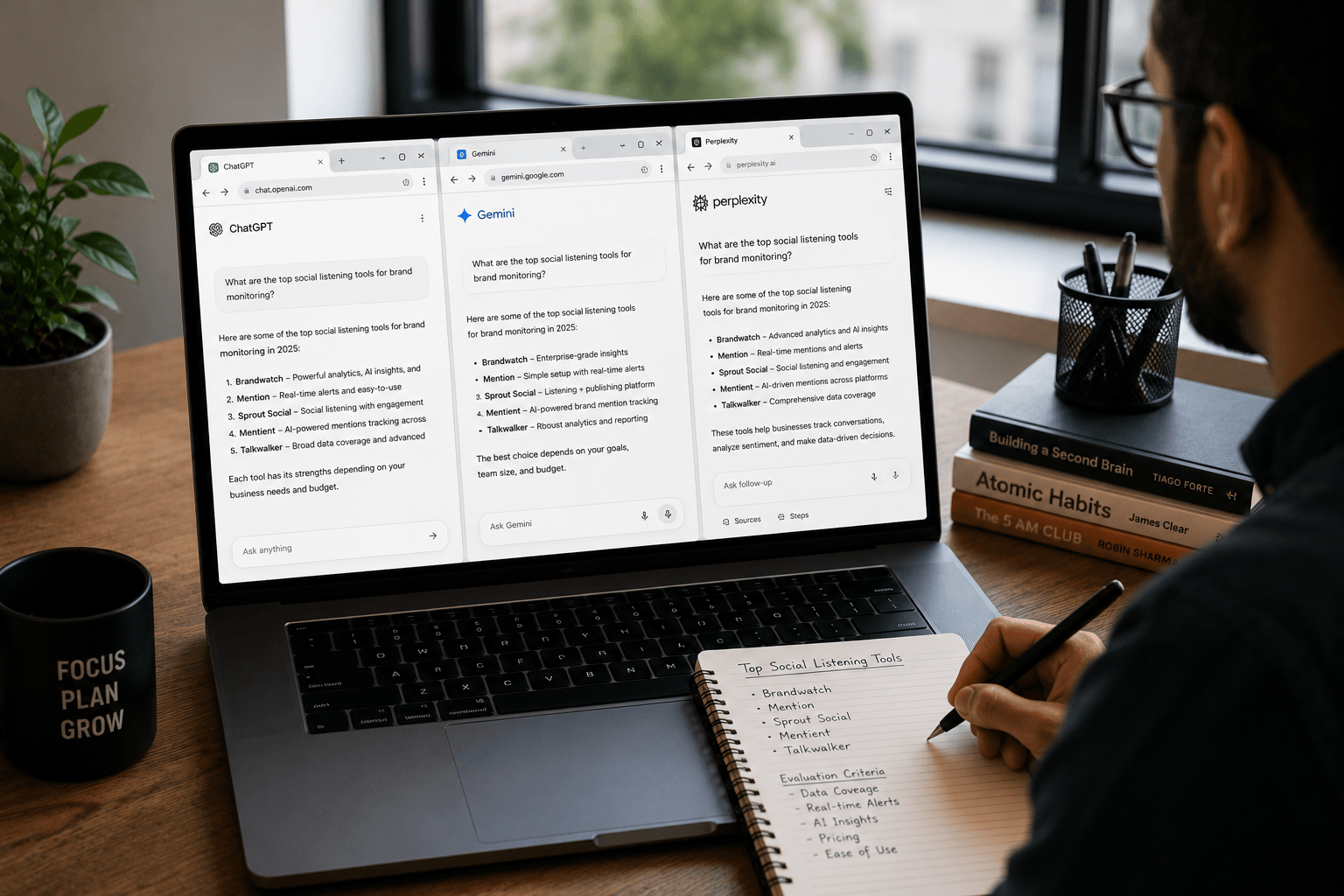
You do not need a tool to get a first read. Open ChatGPT, Gemini, and Perplexity in three separate tabs and run the same 20 to 30 category questions through each one, the kind of question a real buyer would type: "best [category] tools for small teams," "[competitor] vs [competitor] alternatives," "is [your category] worth it." Log which brands appear in each answer, in what order, and in what context. Repeat the same query set monthly. That consistency, more than any single answer, turns a one-off snapshot into a comparison you can actually trust over time.
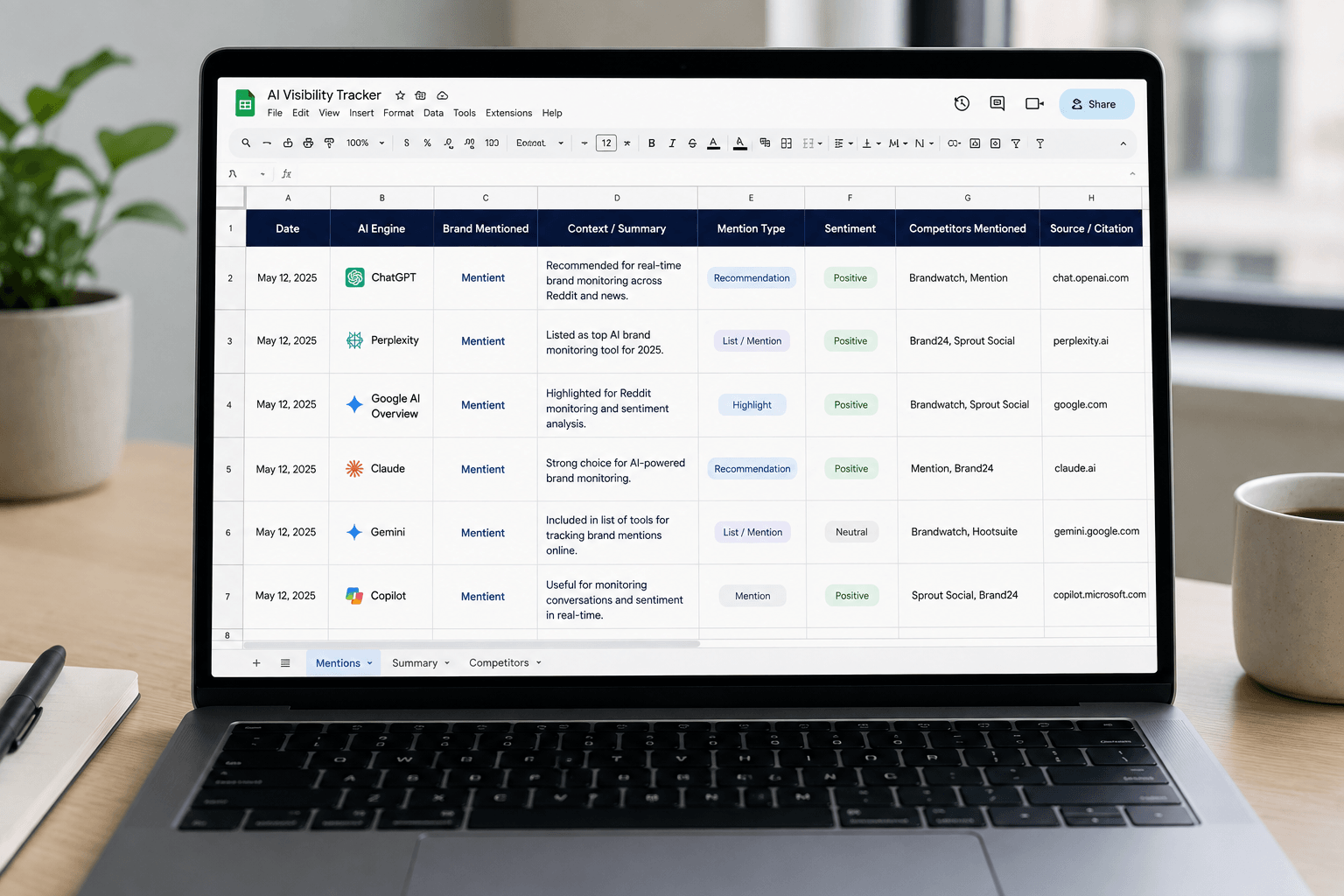
Three practical notes make the manual version more reliable. First, use a fresh, logged-out session where possible, since a signed-in account with a long chat history can skew results toward what the model has learned about your prior conversations rather than a neutral answer a new user would see. Second, run the full set in one sitting rather than spreading it across days, since model responses can shift with routine updates and you want a clean snapshot, not a blend of two different model states. Third, save the actual answer text, not just a yes-or-no mention flag, since the context is where the real signal lives.
How ChatGPT, Gemini, and Perplexity differ
These three engines do not pull from the same data or weigh it the same way, and treating them as one combined "AI search" channel hides real gaps. ChatGPT still leads overall usage, though its share of AI chatbot web visits has recently dipped below 50% for the first time as users spread across Gemini, Claude, and other assistants. Gemini's advantage is distribution: AI Overviews sit directly inside Google Search results that billions of people already open daily, which means a brand can show up there without a user ever deciding to try a dedicated AI chat product at all. Perplexity leans harder into cited, source-linked answers, which in practice makes it somewhat more transparent about where its information came from than a typical ChatGPT response.
The practical consequence: a brand cited heavily by ChatGPT is not automatically cited the same way by Gemini or Perplexity. We covered the broader mechanics of how these engines decide what to cite in our GEO explainer, and the short version applies directly here: retrieval and selection are separate steps, and a strong showing on one engine says very little about the others.
Scaling past manual checks
Manual checking works for an initial audit. It breaks down as a recurring process, since running 20 to 30 queries across three engines every month, by hand, logging context for each answer, is a real time cost. Consistency is the part that actually compounds into a useful trend line, and it tends to quietly drop the moment the person who set it up gets pulled onto something else. That is where most brands either drop the practice entirely or move to a dedicated tool.
We built a dedicated AI visibility platform specifically to remove that manual burden, running a consistent query set across engines on a schedule and logging mention frequency, context, and competitive position automatically rather than relying on someone remembering to open three browser tabs every month. Context-aware AI monitoring tracks sentiment alongside citation, so a mention count on its own never gets reported as a win without knowing whether the mention was actually favorable.
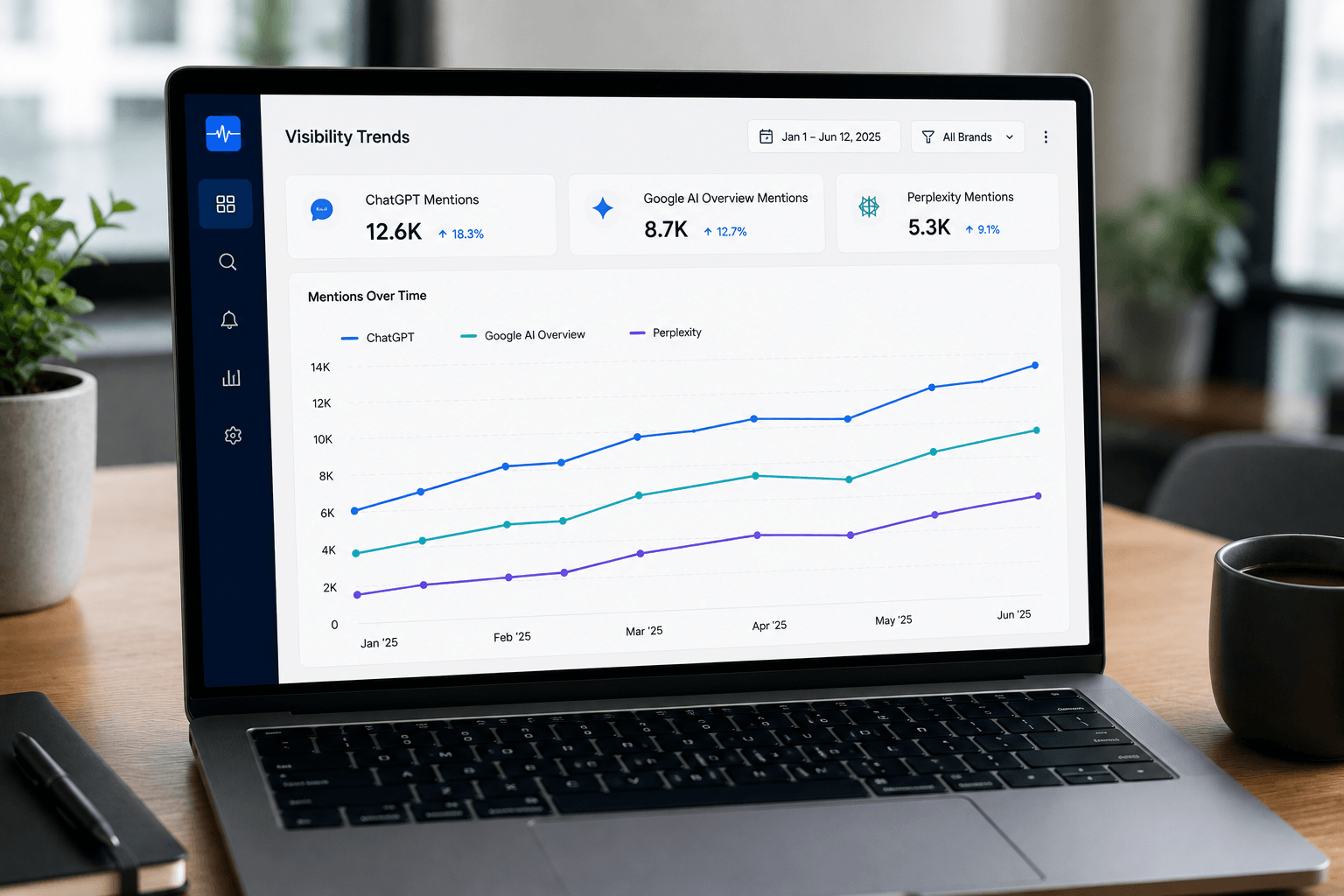
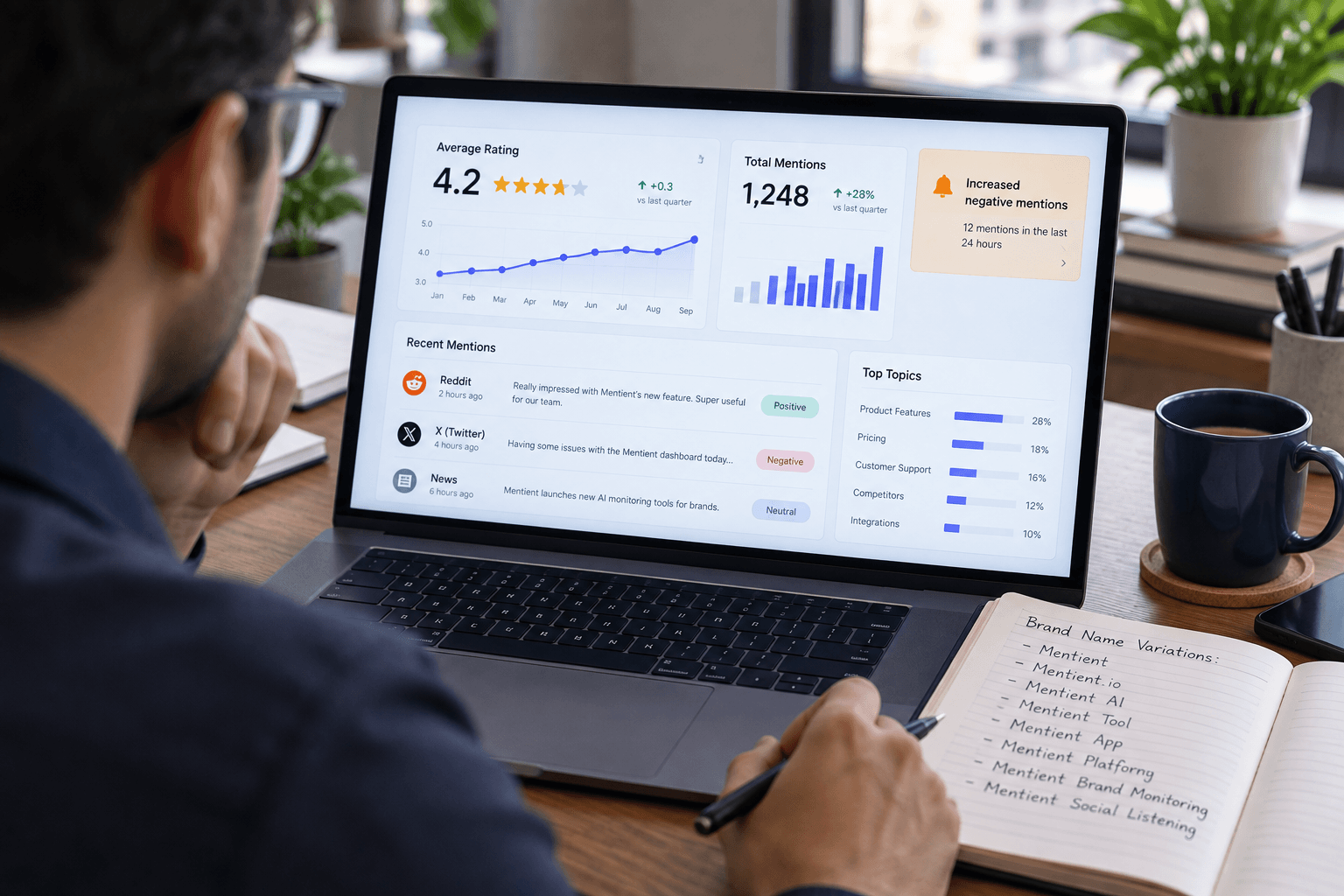
This works alongside, not instead of, traditional monitoring. Pairing AI visibility with news coverage tracking and review monitoring matters because AI engines frequently draw on exactly that material when forming an answer about your brand. A wave of negative reviews or an unresolved press story can show up inside a ChatGPT answer weeks before most teams notice the underlying coverage shift on their own.
Acting on what you find
Tracking without action is just a more elaborate way of watching a problem happen. Once you have a few months of data, three moves tend to produce the clearest results.
- Fix factual errors first. If an engine states wrong pricing, outdated features, or an incorrect founding detail about your brand, that is the highest-priority fix, since it actively misleads a buyer at the exact moment they are evaluating you.
- Strengthen the pages already getting cited. If an engine already pulls from a specific page on your site, that page is proven to be extractable. Add more attributed statistics and named quotes there before spreading effort across pages with no citation history at all.
- Address the gap where competitors win and you do not. If a competitor consistently appears as the top recommendation on a specific question type and you do not appear at all, that specific query is the clearest content priority on your list.
Agencies managing this across multiple client brands benefit from standardizing the query set and reporting format once, since agency-built reporting workflows save real time versus rebuilding a tracking sheet from scratch for every account. PR teams should fold this directly into existing coverage reviews rather than running it as a separate report nobody reads, since press and AI answers overlap.
Common mistakes
- Checking once and calling it done. Model behavior shifts with routine updates. A snapshot from three months ago tells you almost nothing about where you stand today.
- Only checking ChatGPT. Gemini's reach through AI Overviews alone touches an estimated 2.5 billion people monthly. Skipping it because ChatGPT feels like the default assumption leaves a massive blind spot.
- Treating any mention as a good outcome. A mention inside a "budget alternatives to" list next to a stronger competitor is not the same win as a top recommendation, and reporting them identically hides the real story.
- Using inconsistent queries between checks. Swapping out questions each time you check makes month-over-month comparison meaningless. Lock the query set and only revise it deliberately, on a set schedule.
- Ignoring accuracy in favor of volume. A high mention count paired with wrong pricing or outdated features is arguably worse than low visibility, since it is actively steering buyers toward a false impression of your brand.
Frequently asked questions
How often should I check my AI visibility?
Monthly is a reasonable baseline for most brands, tight enough to catch meaningful shifts without generating so much noise that small week-to-week variation gets mistaken for a real trend.
Do AI engines cite the same sources as Google Search?
Not consistently. Fewer than 9% of citations inside ChatGPT and Gemini answers come from a URL that also ranks in Google's top 10 organic results, based on prior Ahrefs analysis, which means strong traditional SEO rank does not reliably predict which pages an AI engine will actually pull from or cite when forming an answer.
Can I influence what an AI engine says about my brand directly?
Not directly in the way you can edit a webpage. What you can influence is the underlying content the engine draws from: your own site, press coverage, reviews, and forum discussion. Improving those sources over time shifts what gets surfaced, though the timeline varies by engine and by how frequently it refreshes its index. Web-connected engines like ChatGPT with browsing enabled or Google AI Overviews can pick up a content change within days, since they query a live index rather than a fixed snapshot. A model's core training data is a different story, since that only updates on a much longer cycle tied to the provider's own release schedule, so a brand hoping to correct a stale or wrong impression baked into a model's training should expect that specific fix to take considerably longer than a web-layer citation update, sometimes a full model generation.
Does a small brand have any realistic shot at AI visibility against larger competitors?
Often a better shot than in traditional search, actually, since AI engines reward specific, well-attributed, extractable content over the backlink volume and domain authority that tend to favor large, established sites in classic organic rankings. A smaller brand with one genuinely well-sourced comparison page can out-cite a larger competitor that never bothered writing one.
A billion weekly ChatGPT users and a 93% zero-click rate on Google AI Mode together mean a huge share of your category's research now happens somewhere you cannot see unless you go looking. Run the manual query set this week across all three engines, even before you decide whether to invest in ongoing tooling. What you find in that first pass usually tells you exactly how urgent the rest of this list is for your specific brand.
See what AI engines are already saying about your brand
Mentient tracks mention frequency, context, and competitive position across ChatGPT, Gemini, and Perplexity, alongside news, social, and review monitoring, all in one dashboard. Start free and see your own AI visibility today.
Start free trial